CASE STUDY

CASE STUDY

Removing the financial panic from medical emergencies.

A zero-interest healthcare credit line designed to feel like an earned benefit — not a loan application.

Client

QubeHealth

Duration

6 Months · 2022

My Role

Lead UX Designer

Team

Team

Sai Trinath Naidu

Sai Trinath Naidu

Lead UX Designer

Lead UX Designer

Rahul Banekar

Rahul Banekar

UI Designer

UI Designer

Afnita Jalal

Afnita Jalal

Graphic Designer

Graphic Designer

Duration

Duration

6

6

Months

Months

May 2022 — Oct 2022

May 2022 — Oct 2022

Tools

Tools

Figma

Figma

Protopie

Protopie

Notion

Notion

Monday.com

Monday.com

Challenges

Challenges

Designing under the

worst conditions.

When the pandemic hit, 60% of Indians had no health insurance at all. The rest discovered theirs was riddled with holes. Designing a solution required navigating a paradox: create instant financial access without triggering the psychological dread of "taking out a loan."

B2B Buyer

The Employer

Needs high employee adoption to justify subscription ROI and demonstrate meaningful benefit in competitive hiring markets.

B2B Buyer

The Employer

Needs high employee adoption to justify subscription ROI and demonstrate meaningful benefit in competitive hiring markets.

End User

The Employee

Standing at a hospital billing counter — needs instant liquidity with zero anxiety about hidden fees, predatory rates, or paperwork complexity.

End User

The Employee

Standing at a hospital billing counter — needs instant liquidity with zero anxiety about hidden fees, predatory rates, or paperwork complexity.

Backend

The Underwriter

Requires foolproof KYC, secure PAN validation, legally binding digital mandates, and ironclad compliance throughout the flow.

Backend

The Underwriter

Requires foolproof KYC, secure PAN validation, legally binding digital mandates, and ironclad compliance throughout the flow.

The ultimate design challenge was pivoting the UX from feeling like "applying for a burdensome loan" to "unlocking an earned corporate benefit."

The ultimate design challenge was pivoting the UX from feeling like "applying for a burdensome loan" to "unlocking an earned corporate benefit."

Process

Process

From chaotic problem space
to zero-friction flow.

The solution required deep operational mapping, aggressive friction reduction, and a single mental model pivot that changed everything.

01

01

Mapping constraints & API capabilities

Mapping constraints & API capabilities

Before drawing a single wireframe, I cross-referenced data requirements from the Risk team with what B2B employers were willing to expose via API. The discovery: professional history and salary didn't need to be entered manually — HR systems could pre-fill securely.

Before drawing a single wireframe, I cross-referenced data requirements from the Risk team with what B2B employers were willing to expose via API. The discovery: professional history and salary didn't need to be entered manually — HR systems could pre-fill securely.

Eliminated 6 mandatory fields by pulling employer HR data through a secure API handshake — before the user ever touched a form.

02

Reframing the mental model

Reframing the mental model

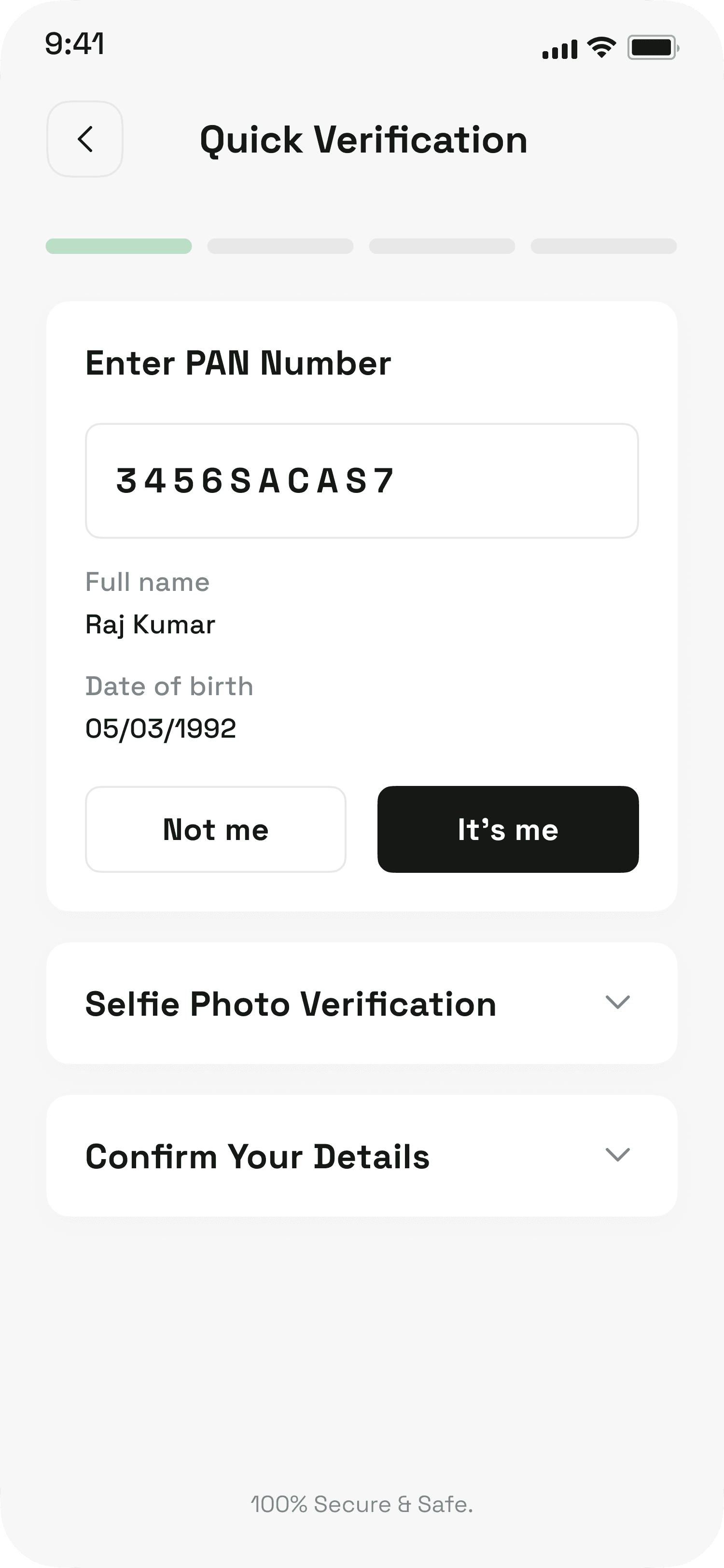
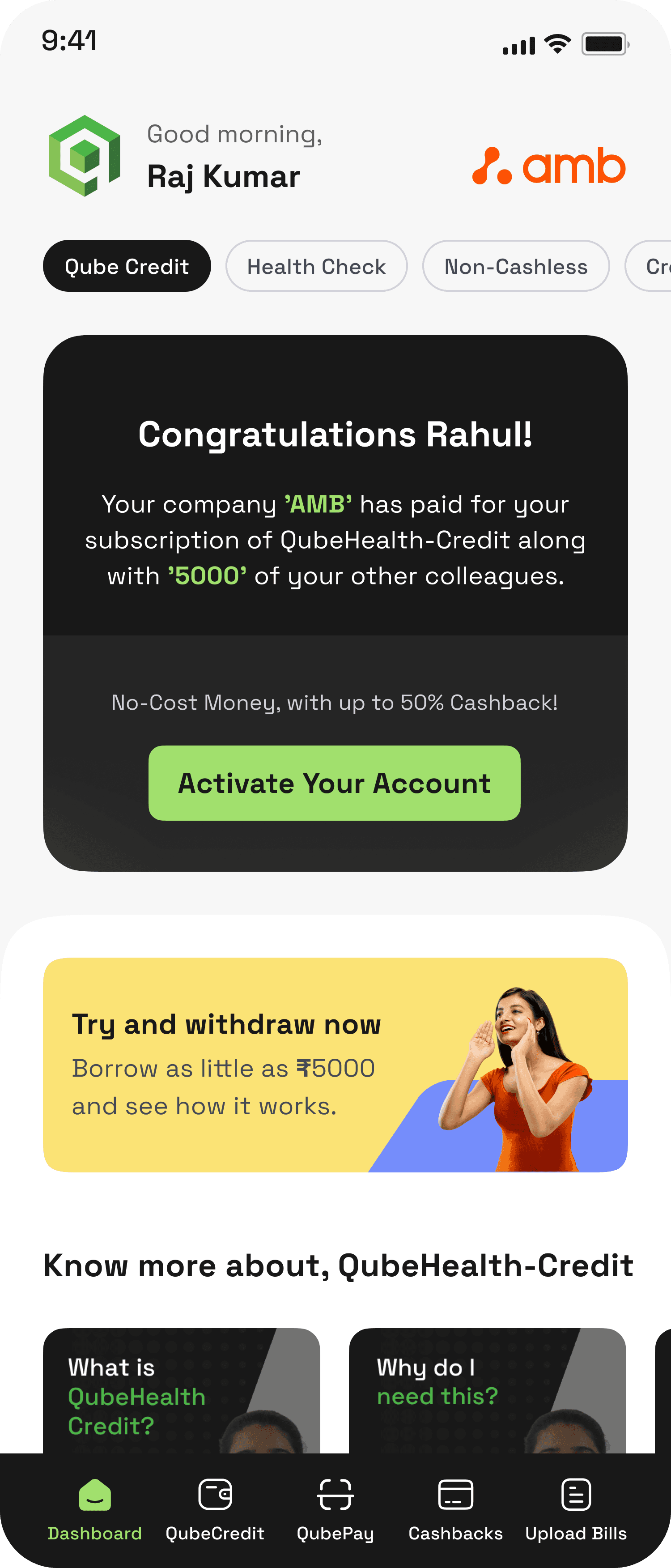
The pivot that changed everything: stop designing a loan application. Start designing the unlocking of a corporate benefit. This one reframe touched every screen — copy, iconography, and the visual hierarchy of the credit limit display.

The pivot that changed everything: stop designing a loan application. Start designing the unlocking of a corporate benefit. This one reframe touched every screen — copy, iconography, and the visual hierarchy of the credit limit display.

"Activate your benefit" outperformed "Apply for credit" in usability tests — simulated task completion rose 40%.
03

KYC flow for stressed users

KYC flow for stressed users

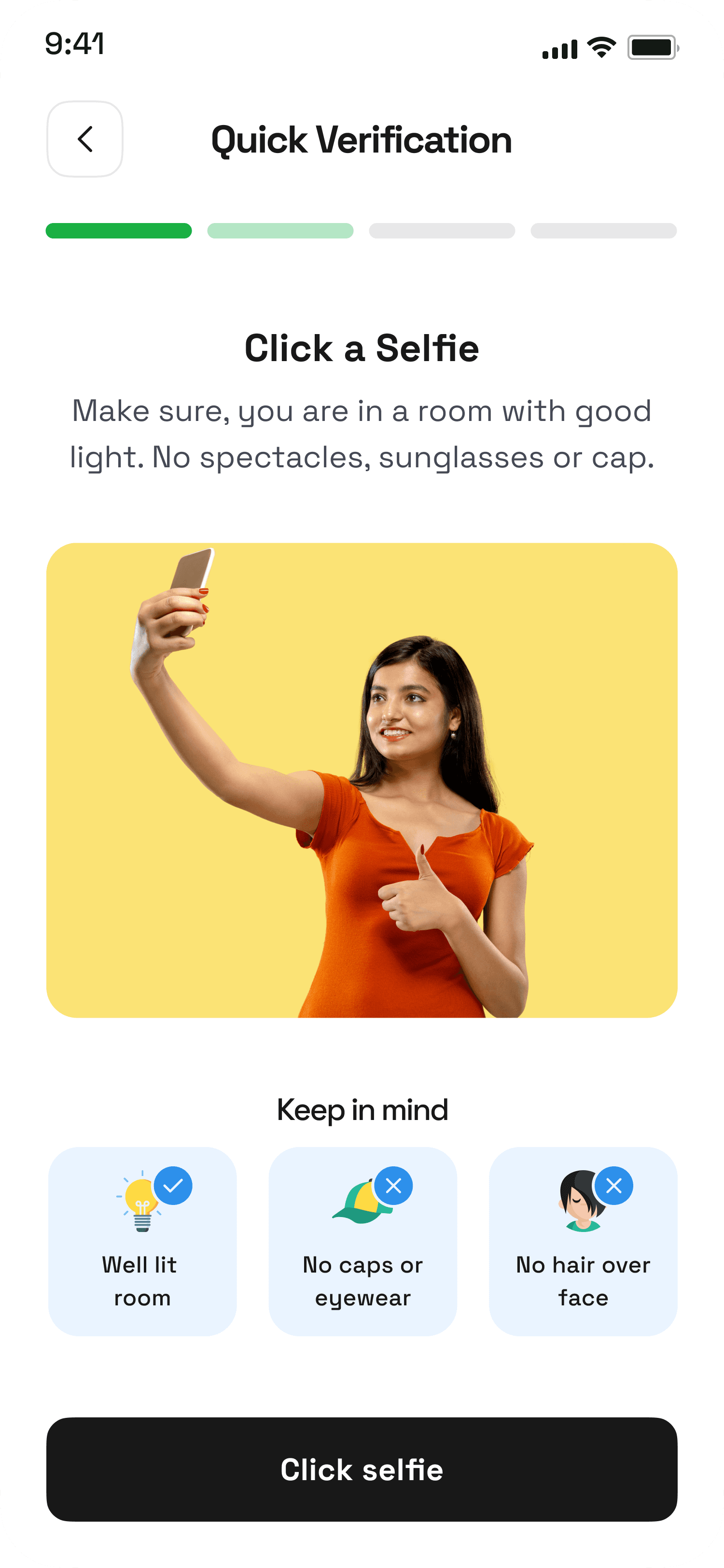
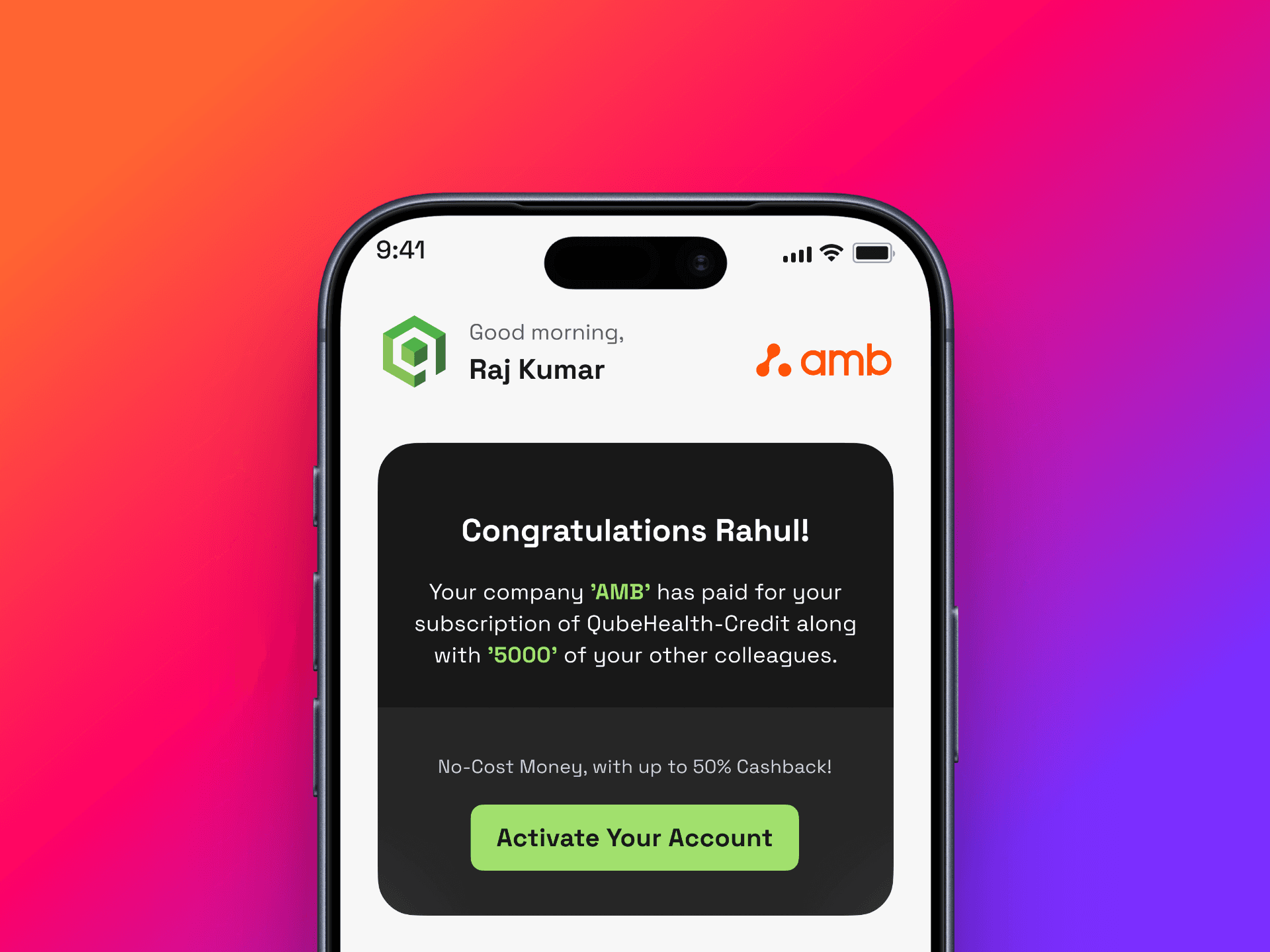
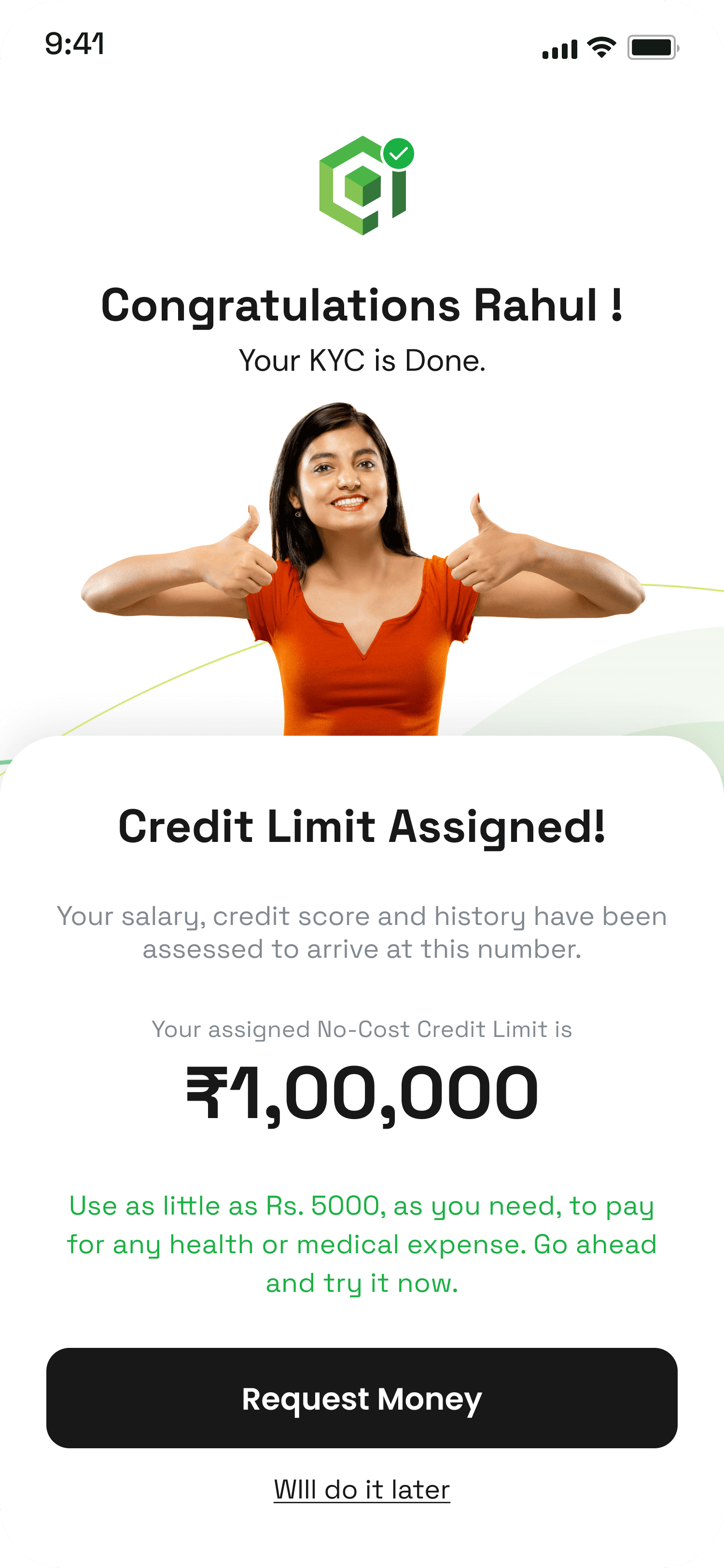
KYC was broken into micro-steps with visible progress. Camera-native document capture reduced typos. The most anxiety-inducing step — digital mandate signing — was placed after the user had already seen their approved limit, removing the fear of the unknown.

KYC was broken into micro-steps with visible progress. Camera-native document capture reduced typos. The most anxiety-inducing step — digital mandate signing — was placed after the user had already seen their approved limit, removing the fear of the unknown.

Progressive disclosure made the flow feel shorter than it was. Users called it "simple" despite capturing identical data to a longer form.

04

Three rounds of usability testing

Three rounds of usability testing

Testing with employees across income brackets, iterating on field labels, error states, and the EMI breakdown visualizer. The final design cut average onboarding time from 14 minutes to under 4 minutes.

Testing with employees across income brackets, iterating on field labels, error states, and the EMI breakdown visualizer. The final design cut average onboarding time from 14 minutes to under 4 minutes.

14 min → under 4 min average onboarding — a 71% reduction in time-to-credit for users under peak stress.

Accordion Architecture

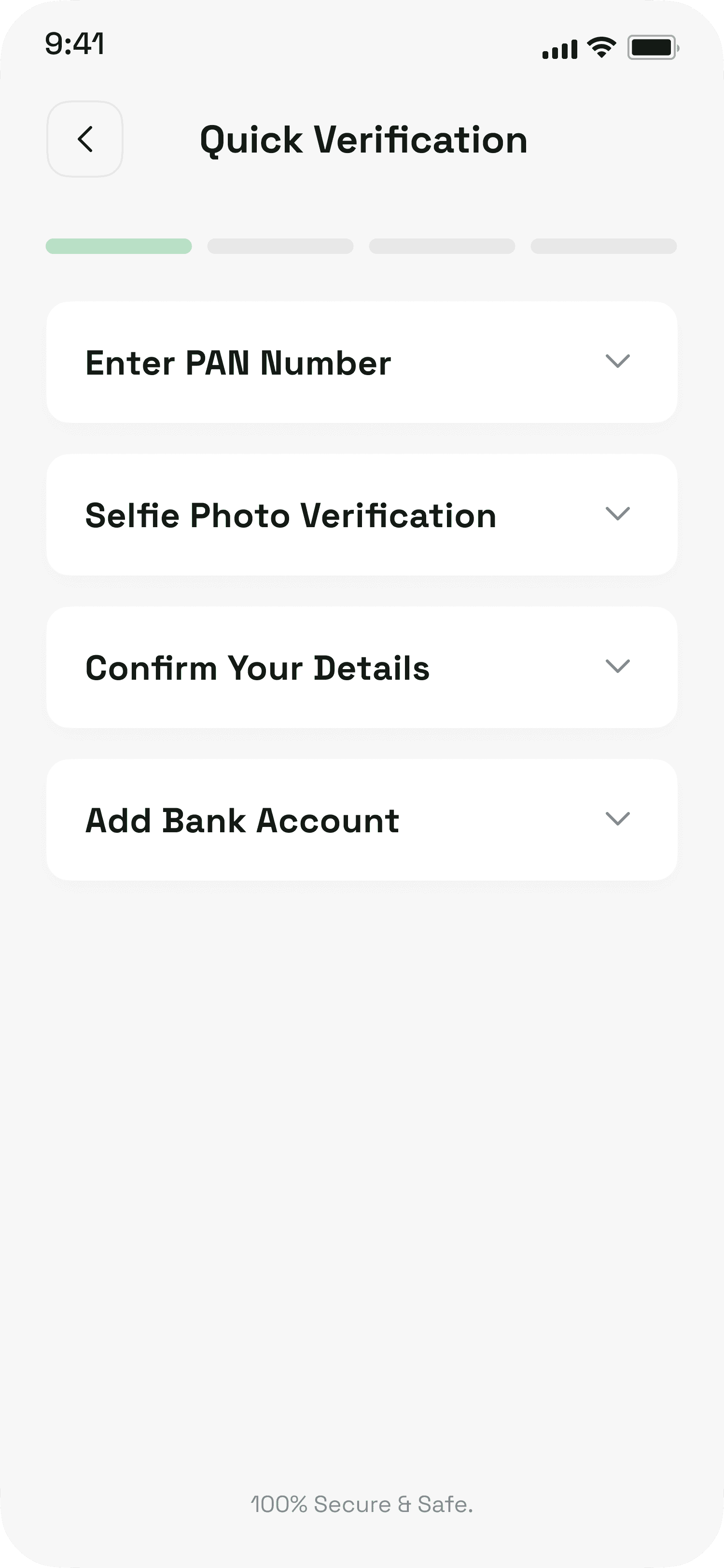
Verification chunked into micro-steps: PAN → Selfie → Confirm. One input at a time. Cognitive load stays near zero throughout the entire flow.

Accordion Architecture

Verification chunked into micro-steps: PAN → Selfie → Confirm. One input at a time. Cognitive load stays near zero throughout the entire flow.

Pre-fill Heavy Lifting

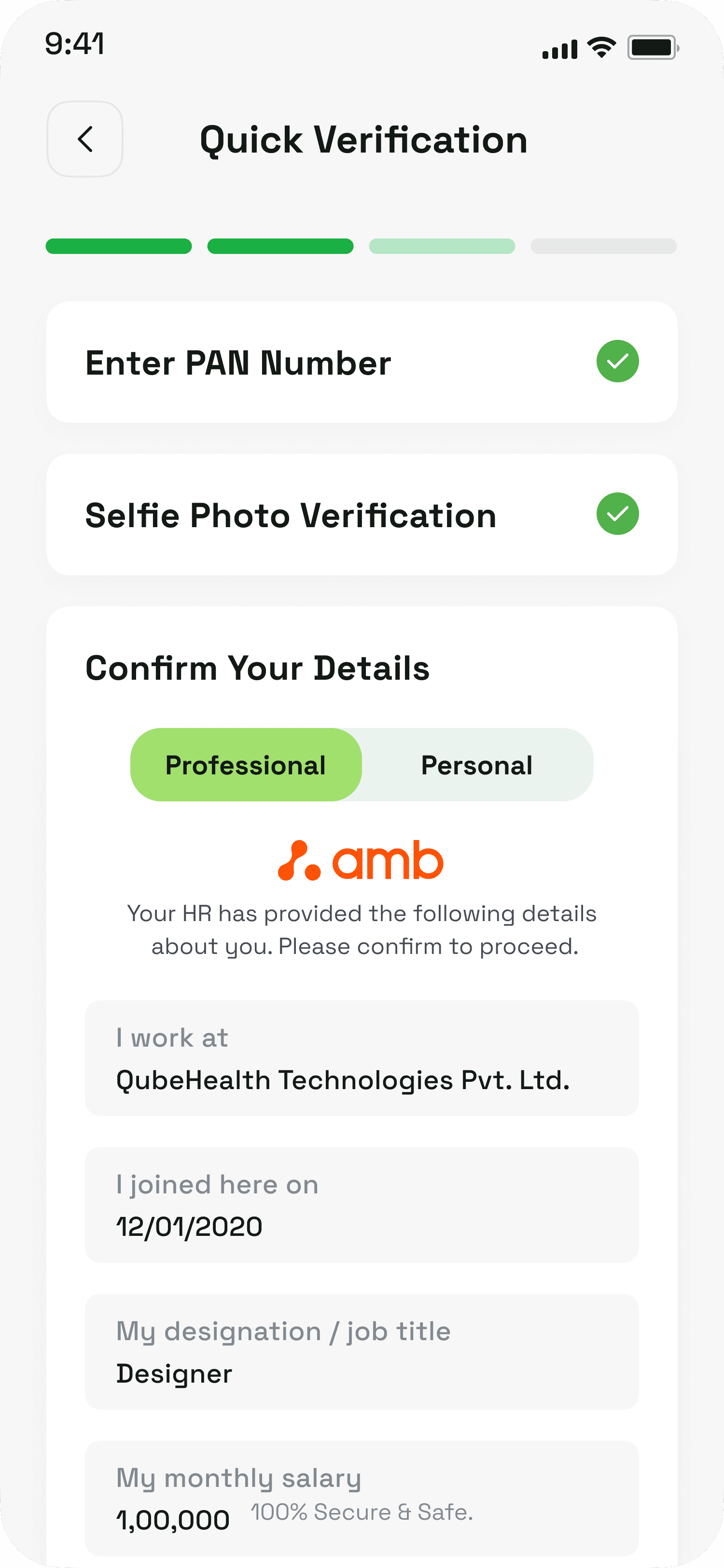
Corporate mandate entry pre-populates all Professional & Personal fields. Users verify, not type. A subtle shift with enormous psychological impact.

Pre-fill Heavy Lifting

Corporate mandate entry pre-populates all Professional & Personal fields. Users verify, not type. A subtle shift with enormous psychological impact.

Making the hard parts easy.

I designed a guided UI that "snaps" to success with real-time cues. By loading data in the background, I removed the wait time for an instant, effortless experience.

Visual Decision

Visual Decision

Design language as psychological infrastructure.

Every decision — color, type, spacing — was made to reduce cognitive load and project trustworthiness at a moment of financial stress.

Canvas

Light, clinical, legible.

A stark white canvas with subtle off-white surface layers serves two purposes simultaneously: it projects clinical cleanliness and guarantees maximum legibility. In high-stress hospital environments, a brightly lit interface reduces cognitive load and ensures dense financial data stays instantly readable.

A stark white canvas with subtle off-white surface layers serves two purposes simultaneously: it projects clinical cleanliness and guarantees maximum legibility. In high-stress hospital environments, a brightly lit interface reduces cognitive load and ensures dense financial data stays instantly readable.

#FFFFFF

#F5F5F2

#EDEDE8

Action Color

Green as a success beacon.

A vibrant, highly saturated green (#A1E06D) used exclusively for positive reinforcement. It powers active states, checkmarks, and primary CTAs — acting as a psychological signal of forward momentum at every step of the verification process.

A vibrant, highly saturated green (#A1E06D) used exclusively for positive reinforcement. It powers active states, checkmarks, and primary CTAs — acting as a psychological signal of forward momentum at every step of the verification process.

#A1E06D

#7EC84A

#E8F7D6

Typography

Space Grotesk — precision where it counts.

Space Grotesk — precision where it counts.

Space Grotesk's geometric, slightly technical structure builds trust instantly. Its monospaced numeral characteristics ensure financial data — PAN numbers, monthly salaries, 3-to-24 month EMI breakdowns — remains hyper-legible under pressure.

Space Grotesk's geometric, slightly technical structure builds trust instantly. Its monospaced numeral characteristics ensure financial data — PAN numbers, monthly salaries, 3-to-24 month EMI breakdowns — remains hyper-legible under pressure.

Display — Space Grotesk

₹24,500 / month

Body

Your 12-month EMI plan has been approved. Zero interest, zero processing fee.

Outcome

Outcome

Shipped. Trusted. Used.

QubeHealth launched as a live product serving corporate employees across India. The design work directly drove measurable improvements in speed, trust, and adoption.
<3 min

Time from app open to credit activated and medical bill paid.

vs. 24–48 hr industry standard

92%

KYC completion rate on the Quick Verification funnel.

Virtually unheard of in consumer lending

100%

B2B client renewal rate in the first billing cycle.

+40% above adoption projections, Q1

01

Emotion is the real brief.

The functional requirement was "KYC flow." The real brief was "make a panicking person feel in control." Those aren't the same problem, and only one of them produces a 92% completion rate.

02

One reframe beats a hundred features.

Changing "Apply for credit" to "Activate your benefit" touched every single screen and drove a 40% uplift in task completion. A mental model shift is a design decision, not just copywriting.

03

B2B products live and die on adoption.

The employer is the buyer, but the employee is the user. Design for the wrong person and no one renews. Employee adoption above projections was the only number the client actually cared about.

04

Research before Figma, always.

Mapping data constraints against API capabilities eliminated entire feature categories before a pixel was placed. The most valuable design work I did on this project was in a spreadsheet, not a canvas.

01

Emotion is the real brief.

The functional requirement was "KYC flow." The real brief was "make a panicking person feel in control." Those aren't the same problem, and only one of them produces a 92% completion rate.

02

Emotion is the real brief.

The functional requirement was "KYC flow." The real brief was "make a panicking person feel in control." Those aren't the same problem, and only one of them produces a 92% completion rate.

03

B2B products live and die on adoption.

The employer is the buyer, but the employee is the user. Design for the wrong person and no one renews. Employee adoption above projections was the only number the client actually cared about.

04

Research before Figma, always.

Mapping data constraints against API capabilities eliminated entire feature categories before a pixel was placed. The most valuable design work I did on this project was in a spreadsheet, not a canvas.

2026 © Trinath Naidu

2026 © Trinath Naidu

2026 © Trinath Naidu